
 The FAA recently updated their advisory circular for professional pilots: “Flightpath Management.” Though directed at professional flight crews, this document provides essential ideas for every pilot. This guide recommends examining every flight through the lens of total energy and flight path management in both manual and automated flight modes: “planning, execution, and assurance of the guidance and control of aircraft trajectory and energy.“
Automation dependency and energy management have been emphasized as a concern for larger aircraft for years. But increasingly this is also a GA concern with even the most basic LSAs coming equipped with sophisticated (and sometimes “creative”) avionics systems. The commonly heard “what’s it doing now?” is the first indication of danger. Fight path awareness and metacognitive skills are essential to ensure positive control and undistracted awareness of every phase of flight; even in smaller airframes.
This Advisory Circular grew out of the larger/earlier Operational Flight Path Study. Sophisticated automation/navigation systems are in almost every aircraft now, stealing attention and driving the future flightpath. And ironically, the demands on the pilot and/or flight crew have actually increased with automation!
the role and requirements for pilot knowledge and skills has not diminished as a result of automated systems or modern flight deck design, but has actually increased to include being a manager of systems as well as maintaining all their basic knowledge and skills.
Failures for which there are no crew procedures or checklists may be becoming more prevalent. This may be partly because avionics systems are now increasingly integrated and complex as opposed to the federated systems used in the past.
 The critical element in managing flight path and energy is understanding the timeline; projecting the aircraft’s flight path and energy state into the future. None of this planning makes sense unless the pilot understands and adjusts the aircraft trend vectors into “future flight path and energy state.” Many new avionics systems assist here by supplying “trend vectors.” This tool is depicting the basic pilot aptitude that must be built and internalized early in flight training.
Every savvy CFI knows before entering the downwind for landing whether their clueless new VFR learner will be “high/low or fast/slow.” This aptitude must be internalized by every new pilot. Understanding and manipulating the future flight path and energy state is vital to the success (and safety) of each flight. This “energy profile” is also distinctly different for different airframes (compare a DA-40 in glide to a Cherokee Six).
This AC and the underlying study also address the training provider, emphasizing the importance of qualified educators providing creative challenges for pilots. Falling back onto the same stale and predictable flight maneuvers for training and review is unacceptable. How many flight reviews have you had that just reviewed the same hackneyed “3S” (steep, slow, stall) you did in private-level training? Does your CFI know your avionics thoroughly? Does your CFI provide useful and creative challenges both for manual skills and automation? In the manual flying arena, the SAFE Extended Envelope Training provides an excellent syllabus for beneficial future dual instruction with a savvy CFI.
Flight instructor training, experience, and line-operation familiarity may not be sufficient to effectively train flight crews for successful flight path management. This will be especially important for future operations…Operators should consider that many exercises required to be hand flown are well-known and repetitive and may not measure the true underlying skill level outside of those specific exercises (e.g., single-engine, hand-flown approaches).
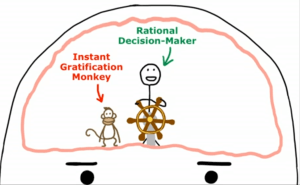 Another vital skill mentioned in the AC that is the “reasonableness check.” When any maneuver is undertaken either manually or especially with automation, a pilot should pause a moment and ask “does this really make sense?” With an autopilot, assuring the correct mode for both lateral and vertical path is critical (“score board” on pfd). Always ask: “What am I asking the aircraft to do here?” Metacognitive skills have been repeatedly emphasized in the SAFE blog, and need to be examined for both manual and automated operations. Don’t let the “magic” operate unmonitored! This awareness requires achieving an “outside perspective” of your actions and the total flight path and energy state.Safety requires verifying that each selected action or input makes sense from this larger perspective. This skill has been described throughout aviation history as an “angel on my shoulder,” “gut feeling” or “view from the balcony.” Metacognition is the heart of maintaining situational awareness. A loss of situational awareness almost always immediately precedes every accident. Fly safely out there (and often)!
See our newly launched SAFE website HERE
 Join SAFE and get great benefits. You get 1/3 off ForeFlight and your membership supports our mission of increasing aviation safety by promoting excellence in education. Our FREE SAFE Toolkit App puts required pilot endorsements and experience requirements right on your smartphone and facilitates CFI+DPE teamwork. Our CFI insurance was developed by SAFE specifically for CFIs (and is the best value in the business).


Tell us what *you* think!