
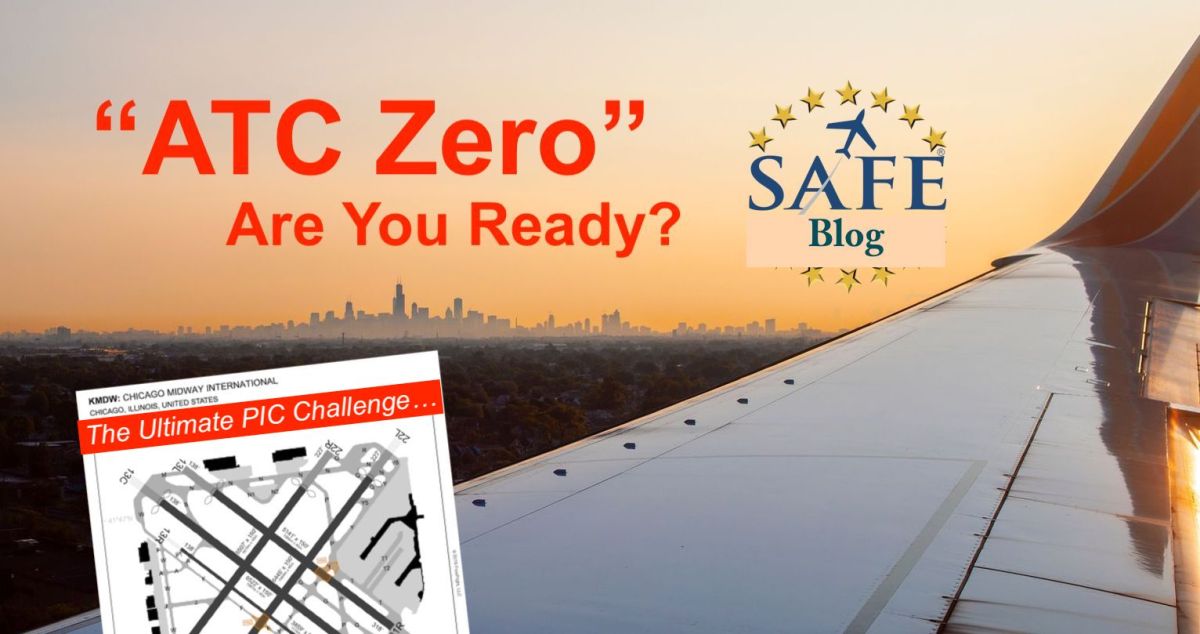
 The pandemic caused ATC outages that caught pilots by surprise at busy locations. “ATC Zero!” – No ATC Services – puts a shiver into any pilot at a busy location (especially operating under IFR). The first pandemic “scrub-down” happened last spring at Midway in Chicago, then McCarran in Las Vegas. ATC-Zero even caught NY Center – the busiest airspace in the U.S. – leaving 270,000 square miles of airspace “uncontrolled” for pilots to operate according to non-radar separation procedures. ATC specialists have been real heroes during the pandemic but keeping them healthy has necessitated some closures. The Midway tower was closed early on – Click here for Midway and Southwest Airlines operated there very professionally for several days. Pilot resilience and flexibility is a key attribute to continuing safely in a rapidly changing situation. This recent challenge from Pilot Workshops makes clear the gravity of this situation and the necessity for creative decision-making.
 As flying activity continues to grow back, we know this will not be the last “ATC Zero” event. It is essential to brush up on your non-tower rules and non-radar separation procedures. Tune in KMDW and listen. Imagine this all happening without ATC. Above all, it is important to remember, these procedures are safe, but were never designed for such busy operations as Midway with daytime traffic so some adjustments and accommodation are essential to safety. The exact details are covered in the FAA’s Operational Contingency Plans.
Pilots do not like surprises, and fortunately, ATC-Zero has been historically rare. Due to the current COVID-19 pandemic, this is an increasingly plausible possibility anywhere due to random infection. During ATC Zero the ATC system is designed to “gracefully degrade” to the next lower level of control. Download this brand new FAA guidance from our SAFE webpage. Pilots familiar with non-tower IFR procedures (small Echo fields, Bahamas?) will adapt quicker to these surprise occurrences; and this article might help. The FAR AIM basics are in 4-1-9 (and scattered elsewhere), please review these essentials as you get back to flying.
 One of the critical safety concerns is to understand that every pilot/crew needs to exercise a cooperative attitude to successfully (and safely) work through these emergency situations. There are procedures but often no precise playbook. And though everyone wants to be efficient and on time, the usual consequence of non-sequenced arrivals is delay and accommodation. Patience, knowing the rules and compliance are the key attributes every pilot needs to exercise to get through these situations safely. Be especially careful during ground operations in non-tower operations. Many of these airfields were not designed for elegant “cooperative operations.” Fly safely out there (and often!) See you at Sun ‘N Fun Hangar “Bravo” #22!
Join SAFE  to support our safety mission of generating aviation excellence in teaching and flying. Our amazing member benefits pay back your contribution (1/3 off your ForeFlight subscription)! Our FREE SAFE Toolkit App puts required pilot endorsements and experience requirements right on your smartphone and facilitates CFI+DPE teamwork. Our CFI insurance was developed by SAFE specifically for CFIs (and is the best value in the business).


Tell us what *you* think!