
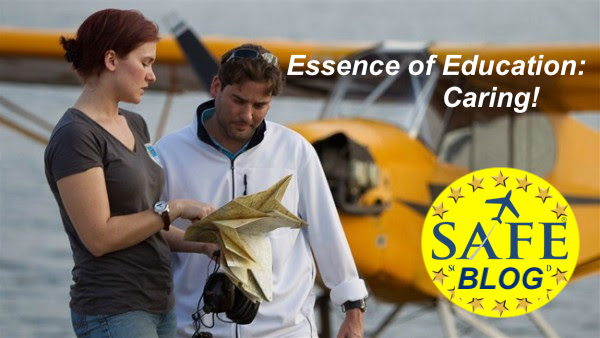
 When I present to groups of pilots and experienced aviation educators and ask for key traits of great aviation educators, the most often mentioned attributes are never taught or tested by the FAA. These are the qualities of caring and compassion, patience and clear communication; the skills of emotional intelligence.
There are two very different components working together to create an amazing aviation educator. First are the obvious piloting skills and knowledge – the physical manipulation of the controls and associated skills. But more importantly, a great educator must be blessed with compassion, empathy, and the ability to communicate clearly. A great educator has a well-developed caring personality with a deep well of patience. A great CFI is usually a “people person” with a passion for seeing others succeed and a “warm heart.” Unfortunately, this personality trait can be hard to find in aviation. The ALPA analysis of the pilot personality lists pilots as most often controlling and dominant, somewhat intolerant and emotionally cold.
Pilots avoid introspection and have difficulty revealing, expressing, or even recognizing their feelings. When they do experience unwanted feelings, they tend to mask them, sometimes with humor or even anger. Being unemotional helps pilots deal with crises, but can make them insensitive toward the feelings of others.
 If you apply this lens to “CFIs you know” you will quickly realize that some CFIs are really great pilots but are emotionally cold and fail miserably at the skills of empathy and caring. To these people, compassion and patience feel more like a burden or weakness; something required by the job but not central to their personality. Their teaching ability is often less than wonderful. The enigma for me is why a person like this would seek a CFI certificate since they actually dislike the time spent working through other people’s problems and inspiring insights. Part of the answer may be that the “aviation ladder” almost requires a CFI certificate to build the required hours for a career. Another reason is the CFI certificate represents another “pelt on the wall;” a certificate gained and perhaps required for advancement. In these cases, the unfortunate students pay the price for CFI aviation advancement and hour building.
In most cases, the physical manipulation of flight controls, knowledge, and judgment can be taught to a wide spectrum of people so they reach commercial-level flight proficiency. But can emotional/educational aptitude be taught? In 25 years of operating a flight school, I would argue that there are definite limits in the success of conveying emotional intelligence unless you have a motivated learner. And in the FAA testing system, there is no metric or ACS code for “warm heart and caring.”
 This very same enigma is a central problem in the medical field. Some of the least effective physicians are impersonal technicians who lack warmth and “bedside manner.” They should be in the lab, not dealing with patients. Their technical competence may be impressive but if they fail to connect with the patient on an emotional level, their interventions are less successful. Superior emotional intelligence not only improves the ultimate results in aviation and medicine, but it also enhances the quality of life for the caregiver (and CFI), preventing burn-out and depression.
 For aviation educators, the skills of caring and communication are most often more fully developed in a person with more life experience at work and in a family situation. The ability to interact, care and share develops with time and practice. Many aviators do not realize the heart of professional aviation CRM also requires emotional intelligence, creating a stronger flight deck team and crew environment. There is also in aviation an unfortunate confusion of strength and competence with the historic “military model” of toughness and stoic struggle. Many people are not aware that the Marines now practice mindfulness and every Army recruit is now trained in emotional intelligence. These skills are now regarded as required for leadership and promotion in the Army. (The traditionally understood model of “strength” is changing even in our military) These mental/emotional skills are worth learning for resilience, strength and certainly for successful educational effectiveness. Fly safely out there (and often).
 Join SAFE to support our safety mission of generating aviation excellence in teaching and flying. Our amazing member benefits pay back your contribution (1/3 off your ForeFlight subscription)! Our FREE SAFE Toolkit App puts required pilot endorsements and experience requirements right on your smartphone and facilitate CFI+DPE teamwork. Our CFI insurance was developed by SAFE specifically for CFIs (and is the best value in the business).
Tell us what *you* think!