
 Situational awareness (SA) requires the accurate gathering of data (despite physical and mental obstacles) then filtering and making sense of this buzzing cacophony and finally projecting this all forward in time toward an intended outcome. In the context of a busy and distracting aviation environment, this is a complex undertaking. Understanding and mastering this critical mental process is the heart of aviation safety but gets little examination or instructional focus; “you’ll figure it out…”. And though in every area of aviation our mental content will vary – be it VFR mountain flying or busy IFR in the Bravo – the mental process and tool kit are the same.
Level One SA is data gathering and being present entirely in the moment.
 Given perfect situational awareness (SA) a pilot will perceive an environment completely free of physical or physiological hindrances. But human factors problems complicate this objective; is it too dark, or blinded by the sun, you forgot your glasses? And psychological problems also provide challenges; fatigue, stress or complacency limit our attention/perception. Distraction and “multi-tasking” – ATC calling, pax or pilot interaction – are a fact of life in aviation and they limit our ability to focus and filter signal from noise. And with every distraction to attention “situational awareness recovery” time is required to regain our focus.
According to researchers most errors (76.3%) occur at the Level 1 (perceptual) area – we simply miss the cues, don’t see the signs or we are naturally distracted, bored or blinded in some manner. This is the reason for “sterile cockpit” SOPs in busy environments. A defective mental model also interferes “top down” with perceptual clarity because what we see/hear is driven by what we think is important – we essentially create our own reality. Psychologists call this “attentional blindness” and “perceptual tunneling” – we miss data that might be critical to safety.
Level two SA is developing a “mental model” and understanding/interpreting the current situation.
What does all this gathered information mean in reference to the current, evolving flight profile? At level two our brain assembles the filtered input data (<10%) and assigns probable meanings; “sensemaking.” This process functions continuously and interactively and is often entirely at the subconscious level. We operate largely “on autopilot” when we interpret our world, especially in a time-critical, high-stakes environment.
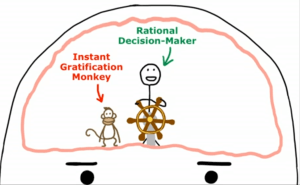 Level 2 is where “hours and experience” help a pilot assemble an accurate mental model. “I’ve seen this story before” is often how we comprehend an evolving situation. The human mind is really a “prediction processing machine” that filters and fits data into an existing mental model. “Cleared for the ILS” engenders a whole spectrum of related and relevant skills, experience and expected patterns. Without this largely subconscious “scripting” we could not function efficiently in our busy buzzing world.
But “hours and experience” is also a problem when we stereotype and “overfit” a model or assume everything is as it was before; complacency. Every mental model blinds us to unique occurrences in the perceptual field (attentional blindness – we see what we “expect”). These missed data may be critical to safety (NASA’s leaking “O rings”?) In studies of accidents 20.3% were Level 2 errors; comprehending the data and assembling the mental model to assign meanings.
Level 3 SA is projecting the currently evolving situation into the desired future outcome.
 You would think imagination would play no role in aviation, but level three is entirely the creative extrapolation of our current situation into a desired or intended outcome; “I will intercept the LOC, couple to the glideslope, break out at 400′ etc.” As with other levels, fatigue, distraction and lack of time can damage SA, but Level 3 SA is especially the vulnerable to these demons. Briefing expected actions and mentally testing expected outcomes is a critical safety tool that often gets skipped or overlooked when time is short. Level 3 SA is our primary method to “get ahead of the airplane” and direct a flight rather than just reacting. Level 3 SA is also where we need to step up to a higher order thinking “conscious oversight” level and test our mental model with Daniel Kahneman’s” System 2″ critical analysis. We cannot operate totally on “decision autopilot” if we want to be safe.

So how can we improve our situational awareness?
Constant, active vigilance of the level we are operating in (and where we should be) is one important method to increase SA. As much as possible, I recommend constantly shifting the levels of SA (like a telephoto lens) dynamically changing from big picture to detail view (micro/macro) in a conscious scanning manner. This is what psychologists call “metacognition” and requires both time and practice. We often get fixated at level one (fiddling with a frequency or some frustrating detail) when we should be engaging the bigger picture. “SA scanning” like an instrument scan improves with practice. We respond physiologically to shiny bright buzzers or screens and often miss subtle cues unless we consciously push our mental focus.
 Another important method to improve SA is by constantly testing our assumptions (mental models) both internally and with others. We all have human limitations and need to accept the fact that our personal perceptions and mental models may be flawed. Whether we are single pilot or have a partner or co-pilot, it’s critical to solicit input and stay curious and humble. No harm in pinging ATC with a verification or talking through the next leg with your co-pilot. A rigid mindset in a dynamic and evolving environment can be dangerous. We must enforce flexibility and constantly test and adjust as necessary. Committing to vigilance and continuous data gathering (rather than numb butt) has saved many flights from disaster.
Most “I was there and survived” stories (I love Ernest Gann) involve an “angel on my shoulder” that reveals a sudden awareness of the bigger picture or just a subtle clue (level 3 SA). Building more time into your flight profile if possible permits this metacognitive magic or conscious oversight to function. Many accidents are precipitated by time pressure – the airplane was way ahead of the pilot’s mental models. Let me know if any of that helps? Fly safely (and often!)

Join SAFE to support our safety mission of generating aviation excellence in teaching and flying. Our amazing member benefits pay back your contribution (1/3 off your ForeFlight subscription)! Our FREE SAFE Toolkit App puts required pilot endorsements and experience requirements right on your smartphone and facilitate CFI+DPE teamwork. Our CFI insurance was developed specifically for CFI professionals (and is the best value in the business).


Tell us what *you* think!